Artificial turf problems: what the symptoms tell you
Players say the pitch feels hard. The ball comes off the surface too high. After a downpour, water stands in the goalmouths for hours. These are the artificial turf problems groundsmen and facility managers hear about most. Each one has a cause you can find in the carpet itself.
An artificial pitch is easier to read than it looks. Treat it the way you would treat a natural field: look at the surface, feel it, ask the players. Most issues usually stem from four causes.
The four most common causes of artificial grass problems
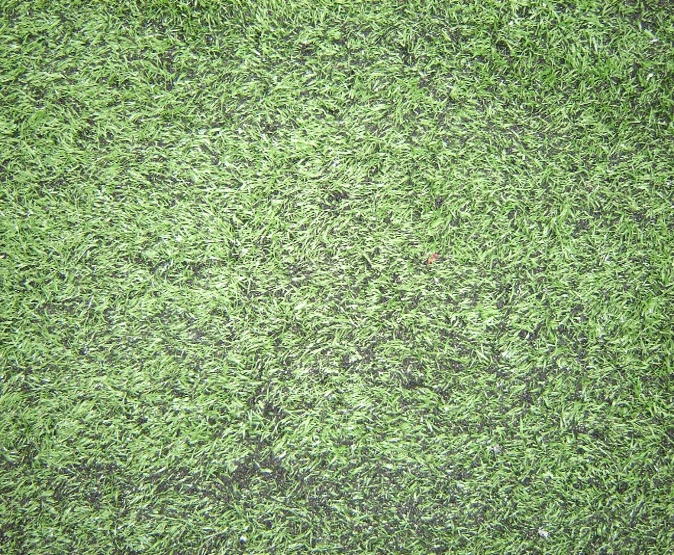
Compacted infill. Rubber and sand infill packs down under play, rain and the weight of maintenance vehicles. The pitch loses its give. It feels hard underfoot and heats up more in the sun.
Flattened pile. Fibres that are not brushed upright lie down in the direction of play. The ball runs faster than it should and players lose grip.
Contamination. Leaves, dust, hair, chewing gum, plasters and broken fibres collect in the infill. Over time they form a layer that blocks drainage, smells and leaves residue on skin and kit.
Too much or too little infill. Infill migrates during the course of a season. It can end up in runoff, in high activity areas like goalmouths, on the players’ boots or in the surrounding drains. Areas that loose infill become bare and start showing the carpet backing. Areas where the infill piles up the surface plays dead.
Symptom and cause at a glance
| What you notice | Most likely cause |
|---|---|
| Pitch feels hard, players tire faster | Compacted infill |
| Surface hotter than usual in the sun | Compacted infill, too much infill |
| Ball rolls too fast | Flattened pile |
| Ball bounces too high | Compacted infill, flattened pile, too much infill |
| Not enough bounce | Too much loose infill |
| Water pools after rain | Contamination blocking drainage, compacted infill |
| Unpleasant smell, black sludge at the pitch edges | Contamination |
| Skin rashes and grazes | Contamination, flattened pile |
| Uneven surface, more slips | Infill displaced, flattened pile |
Why artificial turf problems get worse, not better
An artificial pitch is a large investment. Yet once it is laid, it is often treated as maintenance-free. It is not. Without regular care the surface loses its playing quality, becomes less safe and wears out sooner. Regular maintenance protects the investment: the pitch keeps playing the way it was designed to, stays safe for players and lasts longer. The Football Foundation publishes practical 3G pitch tips for clubs that look after their own pitch.
A grooming brush keeps fibres upright. It does not lift compacted infill, does not take contamination out and does not move infill back to where it is missing. So the problems in the table above build up season by season, until the surface no longer plays the way it was designed to.
The fix for each cause
| Cause | What fixes it | Redexim machines |
|---|---|---|
| Compacted infill | Decompaction: tines or stiff brushes that loosen the infill without damaging the backing | Verti-Groom SV, Base-Rake, Combi-Groom, Verti-Top |
| Flattened pile | Regular brushing against the direction of play | RTCe Plus, Verti-Comb 1800, Combi-Groom |
| Contamination | Cleaning: brushing the infill up, sieving out the debris and returning the clean infill | Speed‑Clean, Verti‑Top |
| Infill in the wrong place | Redistribution with a drag mat or brush, topping up where it is missing | Verti-Broom, Dragmats, Verti-Comb 1800, Combi-Groom |
| Infill too contaminated to clean | Removal and replacement | Eliminator |
Not every pitch needs a new machine. A drag mat behind a compact tractor already redistributes infill. A good grooming routine with the brush you have stops the pile from flattening. The machines come in where the routine runs out: decompaction, deep cleaning and infill removal.
Decompaction: when the pitch feels hard
Compacted infill is the most common reason a pitch feels hard. A brush alone does not loosen it. The Verti-Groom SV decompacts and levels the infill in one pass, with pneumatic depth wheels to set the working depth. The Combi-Groom rakes, levels and brushes behind a small tractor. On a pitch that has gone very hard, run them deeper and more often.
Cleaning: dirt, poor drainage and smell
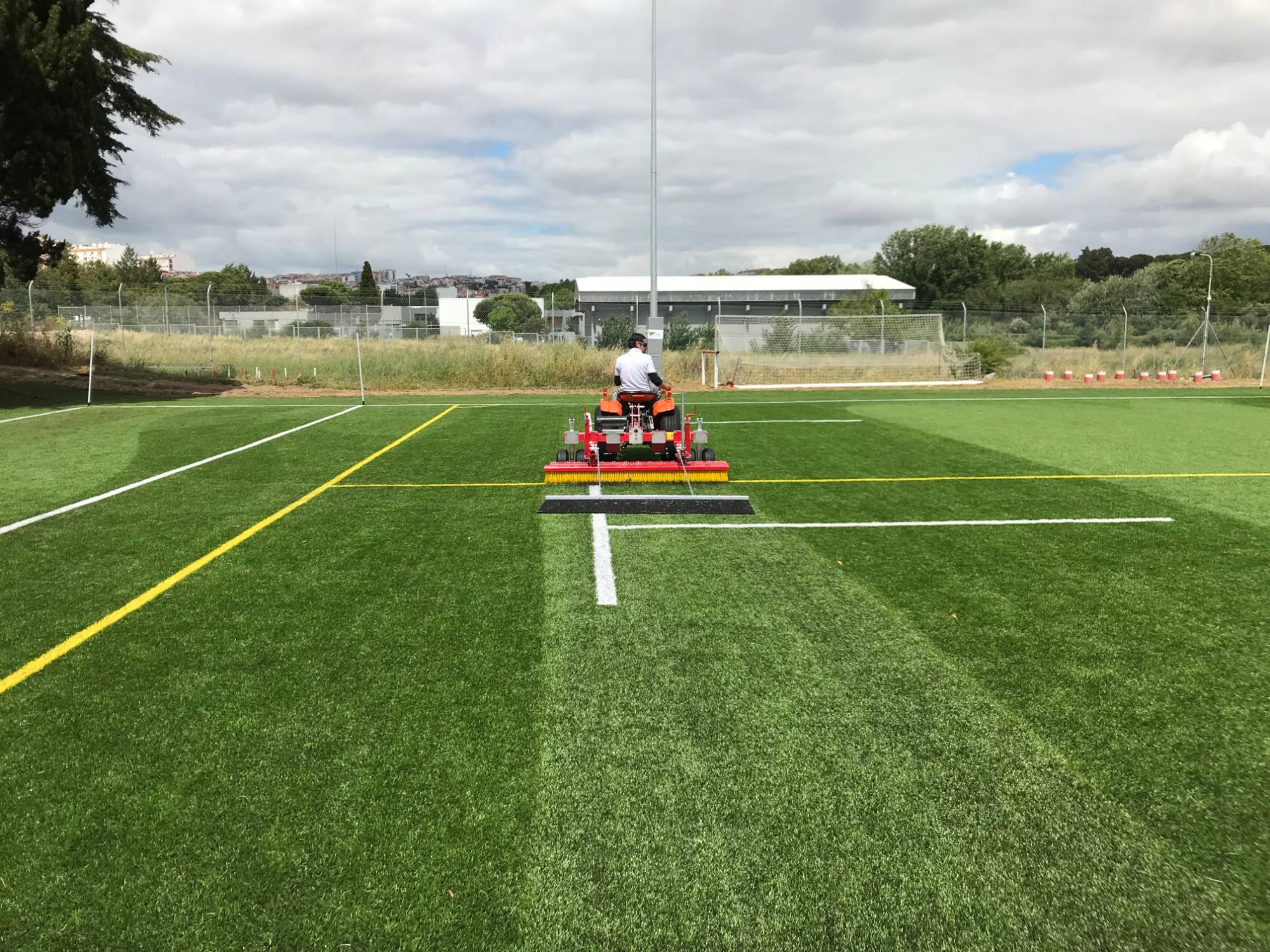
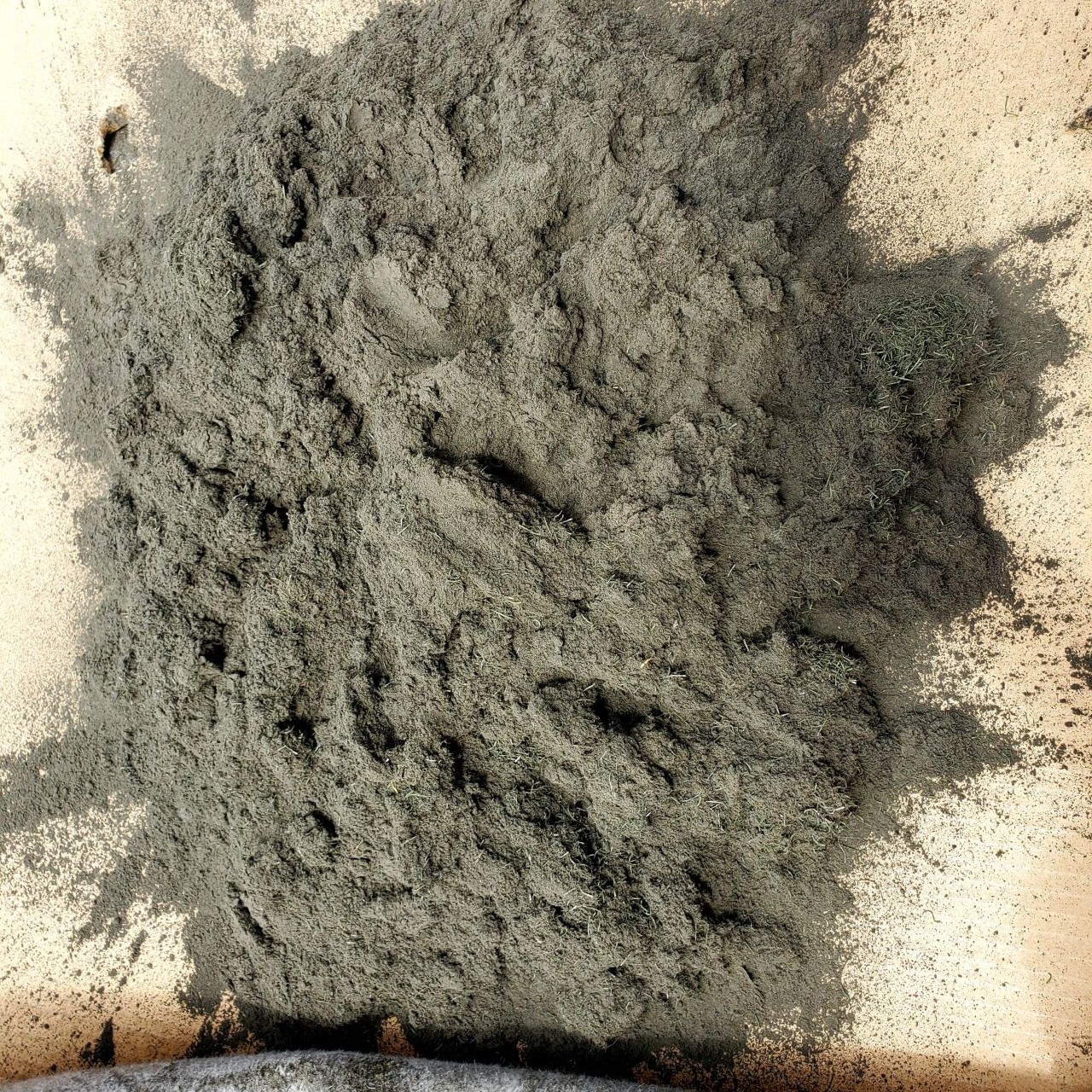
Dirt in the infill blocks drainage and starts to smell. Cleaning takes it out without losing the infill. The Speed-Clean lifts litter and debris, sieves the infill and returns it to the pitch. The Verti-Top adds a vacuum that captures fine dust and hair. Lower its tines and it decompacts while it cleans.
Grooming: flattened fibres and displaced infill
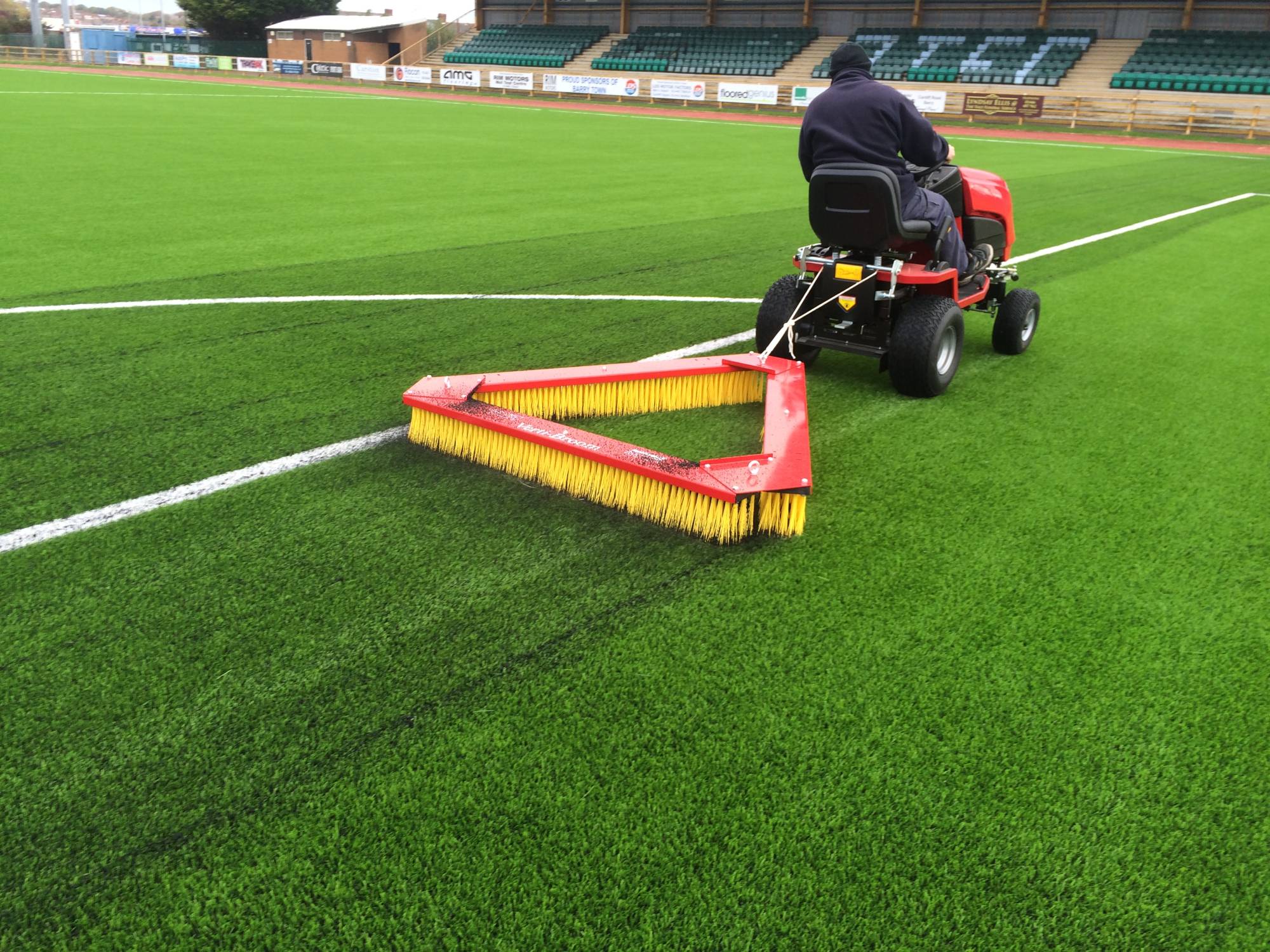
Fibres lie down in the direction of play. Infill drifts into the goalmouths and run-offs. Regular grooming fixes both. The battery-powered RTCe Plus is a ride-on brush that grooms the whole pitch without a tractor or exhaust fumes. The Verti-Comb 1800 stands the fibres back up with brushes working in several directions. The triangular Verti-Broom moves infill back to where it is missing, towed behind almost any vehicle.
When artificial turf problems need a renovation
If artificial turf problems show up across the whole surface (a hard pitch, poor drainage everywhere, a smell), the pitch has usually gone past what weekly grooming can fix. A one-off renovation, with intensive decompaction or infill removal, brings it back to a level that regular maintenance can then hold. If the infill is too contaminated to clean, the Eliminator removes it so it can be replaced.

Conclusion
Most artificial turf problems come back to four causes: compacted infill, flattened pile, contamination and infill in the wrong place. Read the symptoms, find the cause and match the maintenance to it. A pitch that is groomed, decompacted and cleaned on a routine keeps playing the way it was designed to.
Not sure what your pitch needs?
Tell us about your pitch and the problems you see. A Redexim specialist will advise you on the right approach and the machines that fit.
Frequently asked questions
Why is my artificial pitch so hard?
Almost always because the infill has compacted. Play, rain and vehicle traffic press the rubber and sand together until the surface loses its give. Decompaction loosens it again.
Why does water stand on my artificial turf after rain?
Contamination in the infill (dust, organic matter, broken fibres) and compacted infill both slow drainage. Cleaning the infill and decompacting it usually restores drainage, unless the base under the carpet is damaged.
Why does my 3G pitch smell?
Organic material and dirt break down in the infill. Regular cleaning with a machine that sieves and returns the infill removes the source.
Is a ride-on brush enough to maintain an artificial pitch?
For keeping the fibres upright, yes. It does not decompact, clean or redistribute infill, so a pitch maintained with only a brush will still develop most of the problems on this page.
How much does it cost to fix artificial turf problems?
That depends on the pitch, its condition and the machines that fit your situation. A Redexim specialist can advise you on the approach. Quotes are provided by your local Redexim dealer.