Baseball field maintenance: a level infield and a healthy outfield
A baseball field, or baseball diamond, shows every flaw. Water sits in the low spots after irrigation. Ground balls take a bad hop on an uneven infield. The outfield thins out where players stand and run all season. Good baseball field maintenance deals with two things: the grade of the infield and the health of the turf.
This page covers both. It also shows the Redexim equipment for each job.
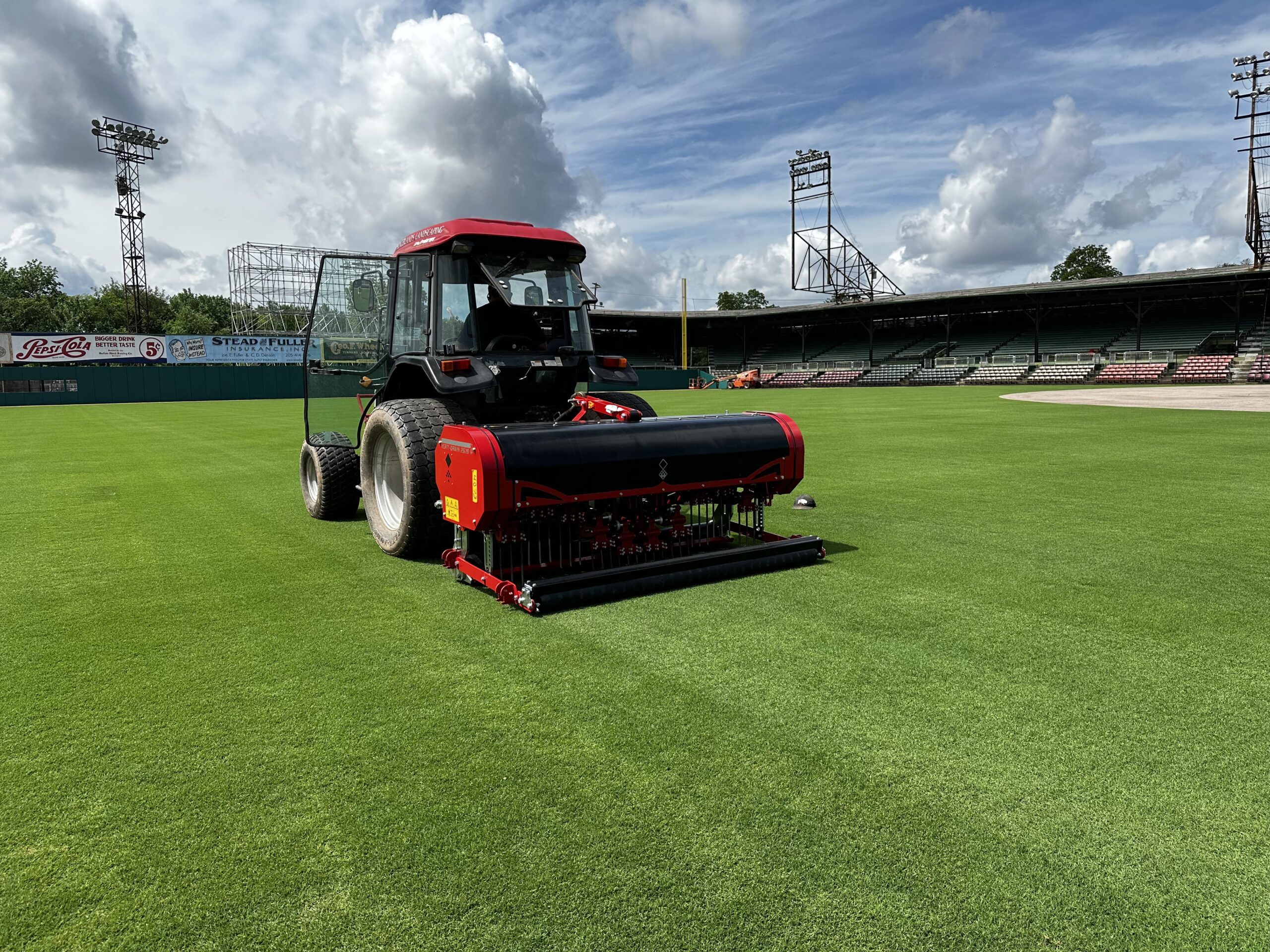
What a baseball field needs
| Area | What goes wrong | What fixes it |
|---|---|---|
| Infield and base paths | Low spots, standing water, bad hops | Laser grading, then regular dragging |
| Outfield and infield turf | Compaction, water that will not drain | Aeration |
| Worn areas and foul lines | Thin and bare turf | Overseeding |
| Whole field | Small holes and uneven spots | Topdressing |
| Outfield | Thatch, a soft and slow surface | Dethatching |
Raking, line marking and mowing are the daily routine. The baseball field maintenance jobs on this page keep the field true through the season.
Infield: getting the grade right
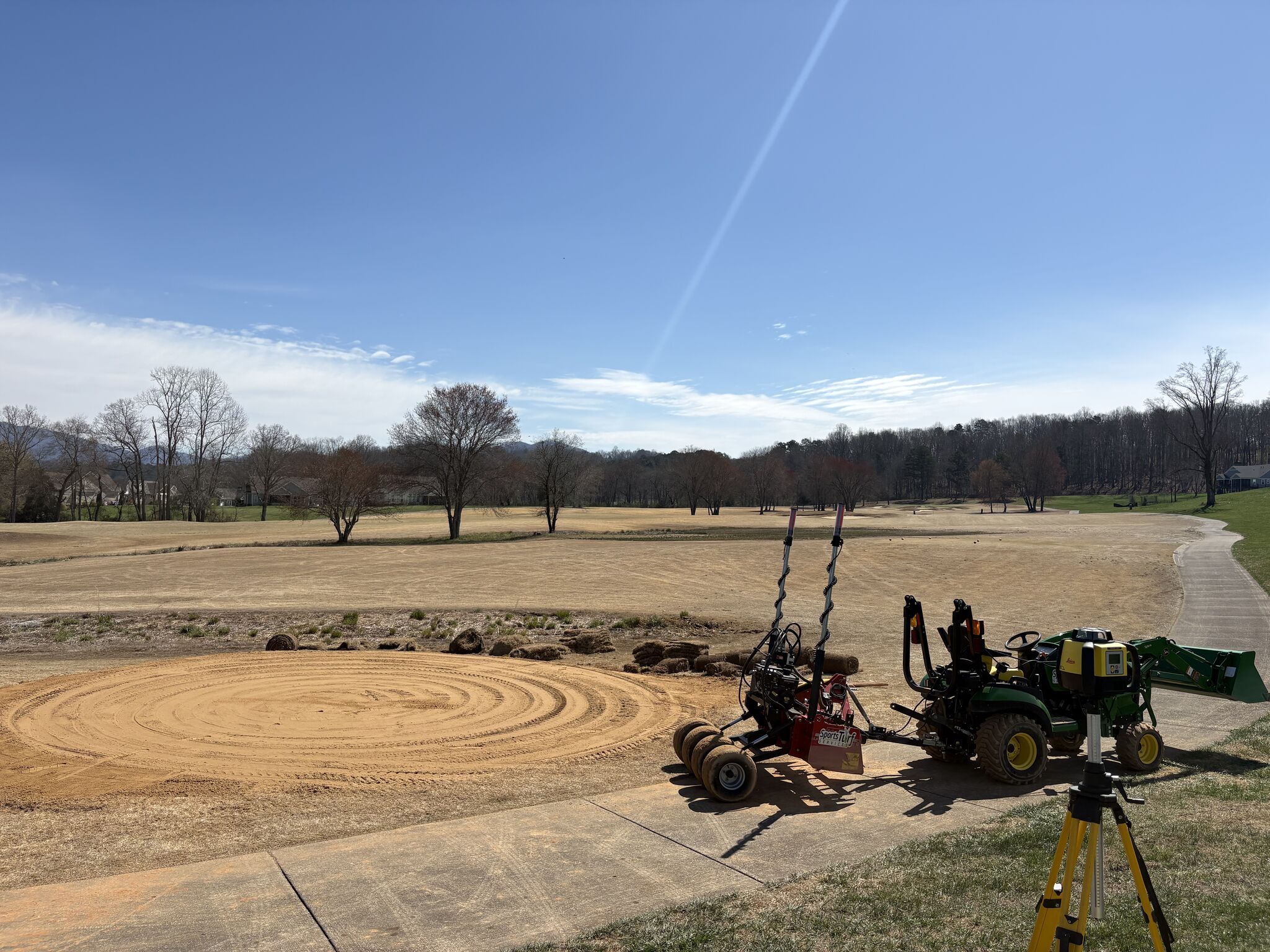
An infield that is slightly out of level holds water and sends ground balls off line. Day to day, a steel drag mat keeps the infield mix smooth. Once the grade has shifted, a laser grader rebuilds it: a laser receiver controls the blade while ripping tines loosen compacted areas. The compact model suits baseball diamonds and tight spaces.
Outfield: hard ground and standing water
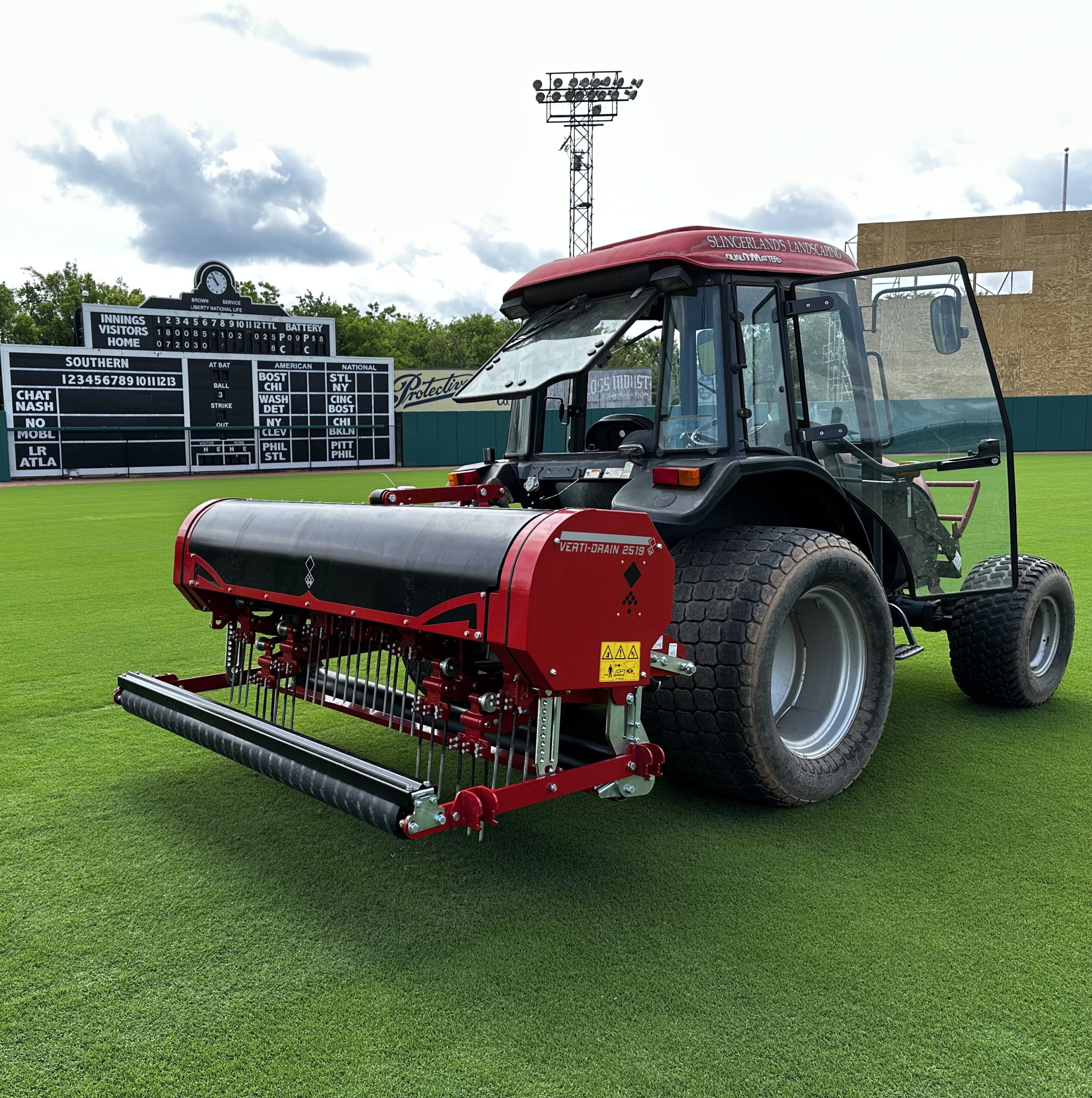
Outfields compact under play, mowers and line markers. Water then sits after a storm and roots stay shallow. The Verti-Drain® 2519 fractures compaction deep in the soil at speed. The Verti-Quake® de-compacts with a wave motion and leaves the surface playable, so it also fits between games. Better drainage helps get the field back into play sooner after rain.
Thin and worn turf
The areas where fielders stand, the foul lines and the edges of the infield wear first. Without new grass, weeds and bare soil move in. Dimple seeders such as the Speedseed press seed into the surface, so the field returns to play quickly. The Overseeder 3D places seed straight into the soil, also on firm ground.

Topdressing: a smoother outfield
After aerification and overseeding, a thin layer of sand fills the holes and evens out small low spots. A brush spreader such as the Rink 1010 spreads wet or dry sand evenly. On a full outfield, a disc spreader such as the Rink DS1200 covers the area quickly.

Thatch: a soft, spongy outfield
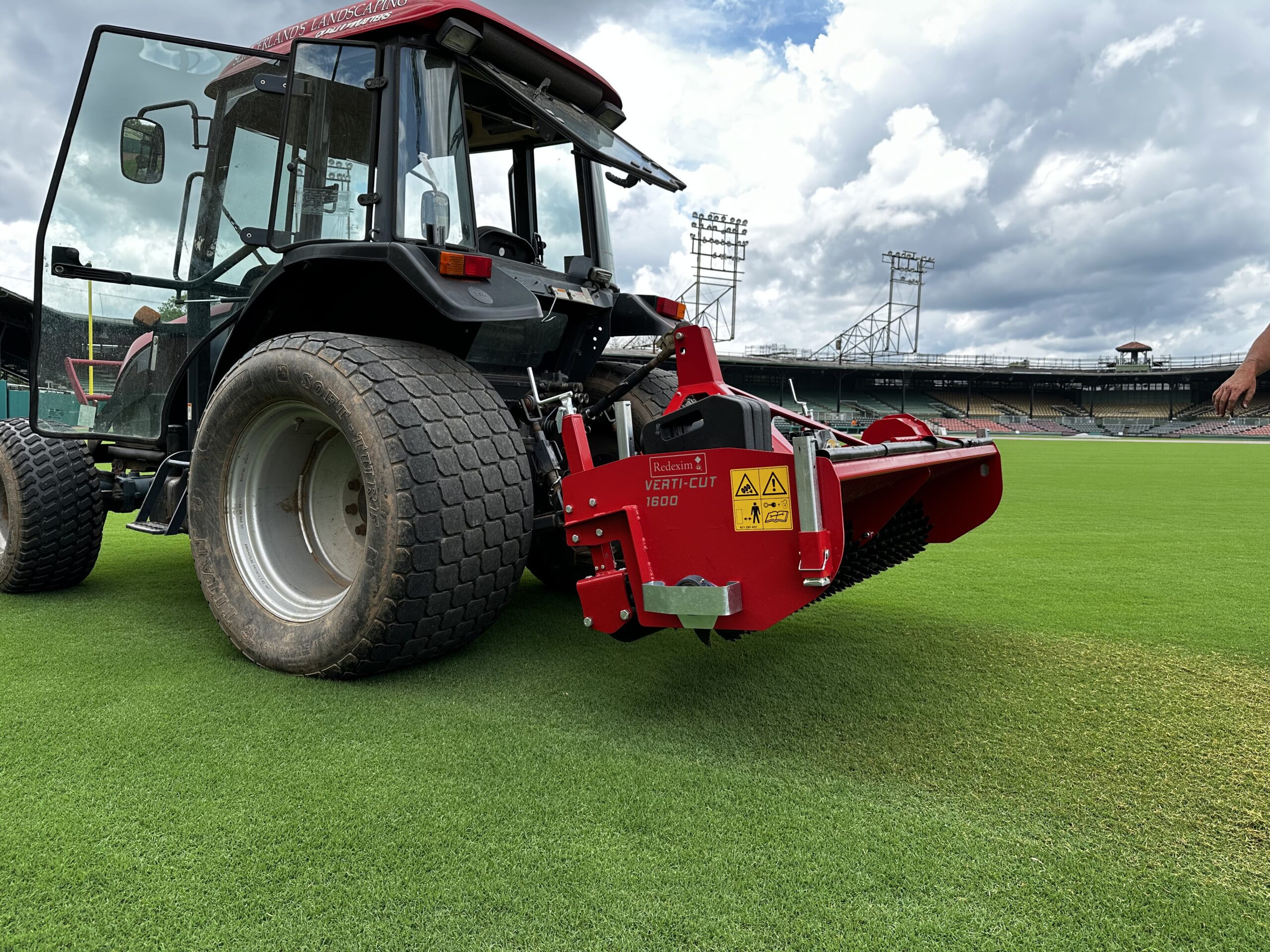
Thatch builds up fastest in outfields that are fed and watered well. The surface turns soft, holds water and plays slow. A Verti-Cut® pulls thatch and lateral growth out with carbide-tipped blades. A Turf-Tidy removes it and collects the debris in the same pass. Our page on the tractor dethatcher explains how to choose.
A baseball field maintenance plan
| Season | Jobs | Equipment |
|---|---|---|
| Off‑season | Laser grading of the infield, deep aerification, dethatching, overseeding and topdressing | Laser grader, Verti-Drain® 2519, Verti-Cut®, Speedseed, Rink 1010 |
| Before the season | Aeration, overseeding of thin areas, a light topdressing to finish | Verti-Quake®, Speedseed, Rink 1010 |
| During the season | Aeration during breaks in play, spot overseeding in worn areas | Verti‑Quake®, Speedseed |
Your grass type, soil and climate decide the exact timing. A field in Arizona follows a different calendar than one in Ohio. The Sports Turf Managers Association (STMA) publishes an annual athletic field maintenance calendar for warm-season fields, month by month.
Proof from the field
At Camelback Ranch in Glendale, Arizona, spring training home of the Los Angeles Dodgers and the Chicago White Sox, the grounds crew prepared the baseball and softball fields with the Redexim Laser Grader. The grade was set once instead of corrected pass after pass. The short video shows the work.
At Rickwood Field in Birmingham, Alabama, the oldest active professional ballpark in the US, the Verti-Drain® 2519 and the Verti-Cut® 1600 were part of the renovation for a Major League game in 2024. Read the Rickwood Field story.
Conclusion
Baseball field maintenance comes down to two jobs: keep the infield grade true and keep the turf healthy. Laser grading sets the grade. Aeration, overseeding, topdressing and dethatching keep the outfield firm and full. With the right equipment for each job, the field plays the same from the first pitch to the last game.
Not sure what your field needs?
Tell us about your field and the problems you see. A Redexim specialist will advise you on the right approach and the machines that fit.
Frequently asked questions
How often should a baseball infield be laser graded?
That depends on how much the field is used and how it is dragged. Many fields are laser graded in the off-season, once the grade has shifted or water starts to sit.
How often should a baseball outfield be aerated?
Many fields are aerated at least twice a year, in spring and fall. Lighter aeration during the season keeps high-traffic areas open.
What equipment does a baseball field need?
Drag mats, rakes, tamps, line markers and mowers for the daily routine. A laser grader, an aerator, an overseeder, a top dresser and a dethatcher for the seasonal work. Redexim makes the drag mats, the laser graders and the turf care equipment.
Can a baseball field be aerated during the season?
Yes. Linear aeration with a Verti-Quake® leaves the surface largely undisturbed, so the field can stay in play.
What does baseball field maintenance equipment cost?
That depends on the machine, the options and your region. A Redexim specialist can advise you; quotes come through your local Redexim dealer.